Nexus 1.4 now available

Nexus Professional 1.4 is now available with a wide array of new features. This release introduces new staging and repository management capabilities as well as improved permissions management tools.

The primary new features of Nexus Professional include:

  • Publishing web sites to Nexus Professional: Nexus Professional 1.4 provides a WebDAV endpoint for publishing a web site. Users can now configure a site repository that can be used as a publishing destination for project documentation.
  • Fine-grained control of redeployment for hosted repositories: Nexus 1.4 makes it easier for the administrator to configure a hosted repository to allow for redeployment of previously deployed artifacts, one-time deployment, or to provide a read-only interface for clients.
  • Improvements to the staging plugin: The staging plugin had numerous improvements in the 1.4 release to provide new functions, such as support for staging rulesets and support for uploading artifact bundles, as well as improvements in the plugin’s user interface, that make the it more intuitive and easier to operate.
  • User account plugin: This feature in Nexus Professional 1.4 gives unauthenticated Nexus users the ability to sign up for a Nexus account. Nexus administrators can configure the default roles and permissions that are granted to newly signed up users.
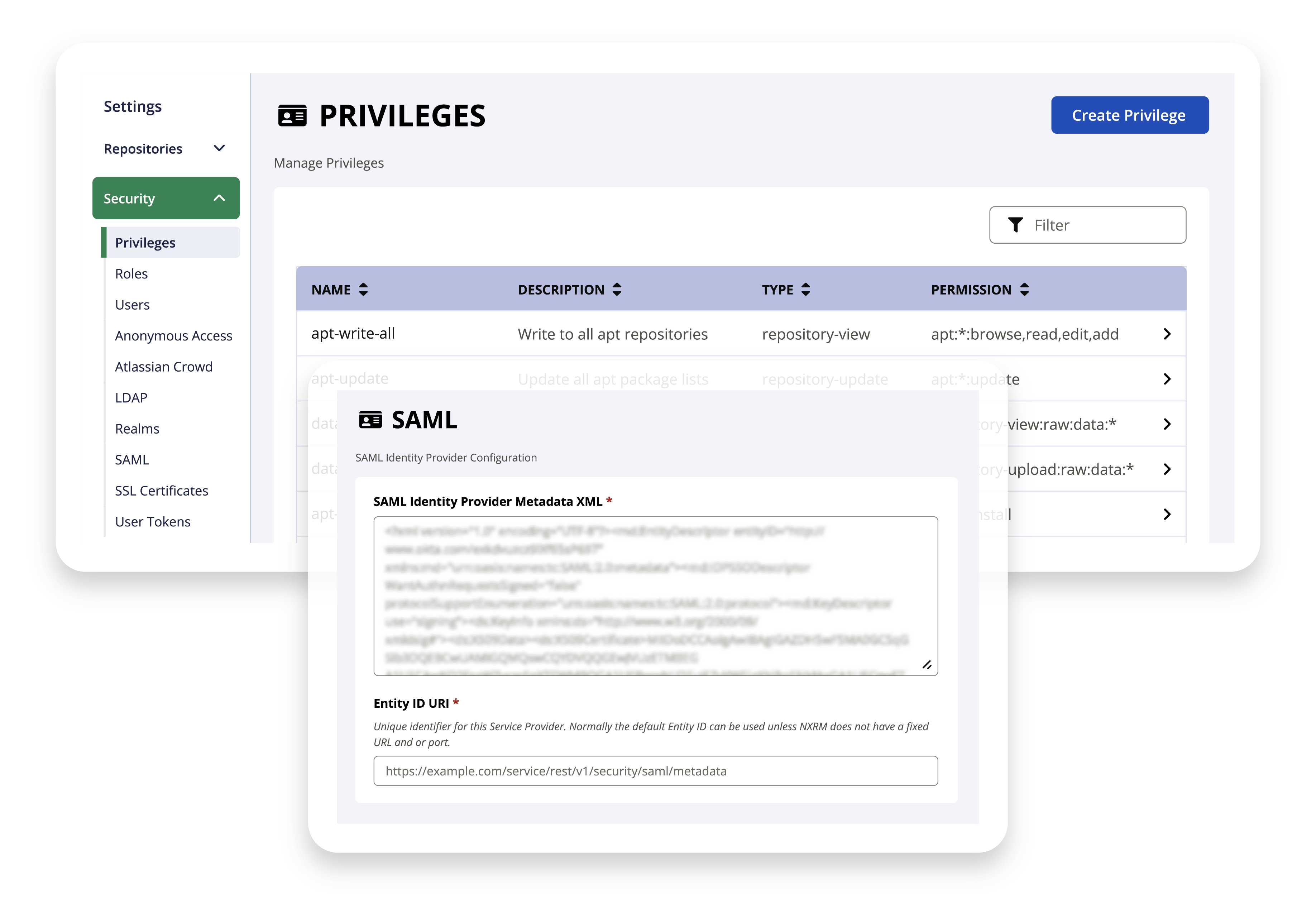
  • Security improvements: With Nexus Professional 1.4 it is now easier than ever to configure and secure a Nexus repository. New user role tree reveals how each role contributes to the permissions for any given user. The new user privilege trace feature allows Nexus administrators to pinpoint which roles contribute which permissions to a particular user, while the new role tree can be used to browse the hierarchy of roles and privileges associated with any Nexus role. Additionally, Nexus now has the capability to configure a role to prevent users from browsing particular repositories.
  • Integration with Atlassian Crowd: Nexus Professional’s Atlassian Crowd plugin provides seamless integration between Nexus and Atlassian’s Crowd server, a versatile user and directory management system.

Nexus Professional Features

Make enterprise builds and releases more manageable with these key features. Click on each item to learn more about each feature.

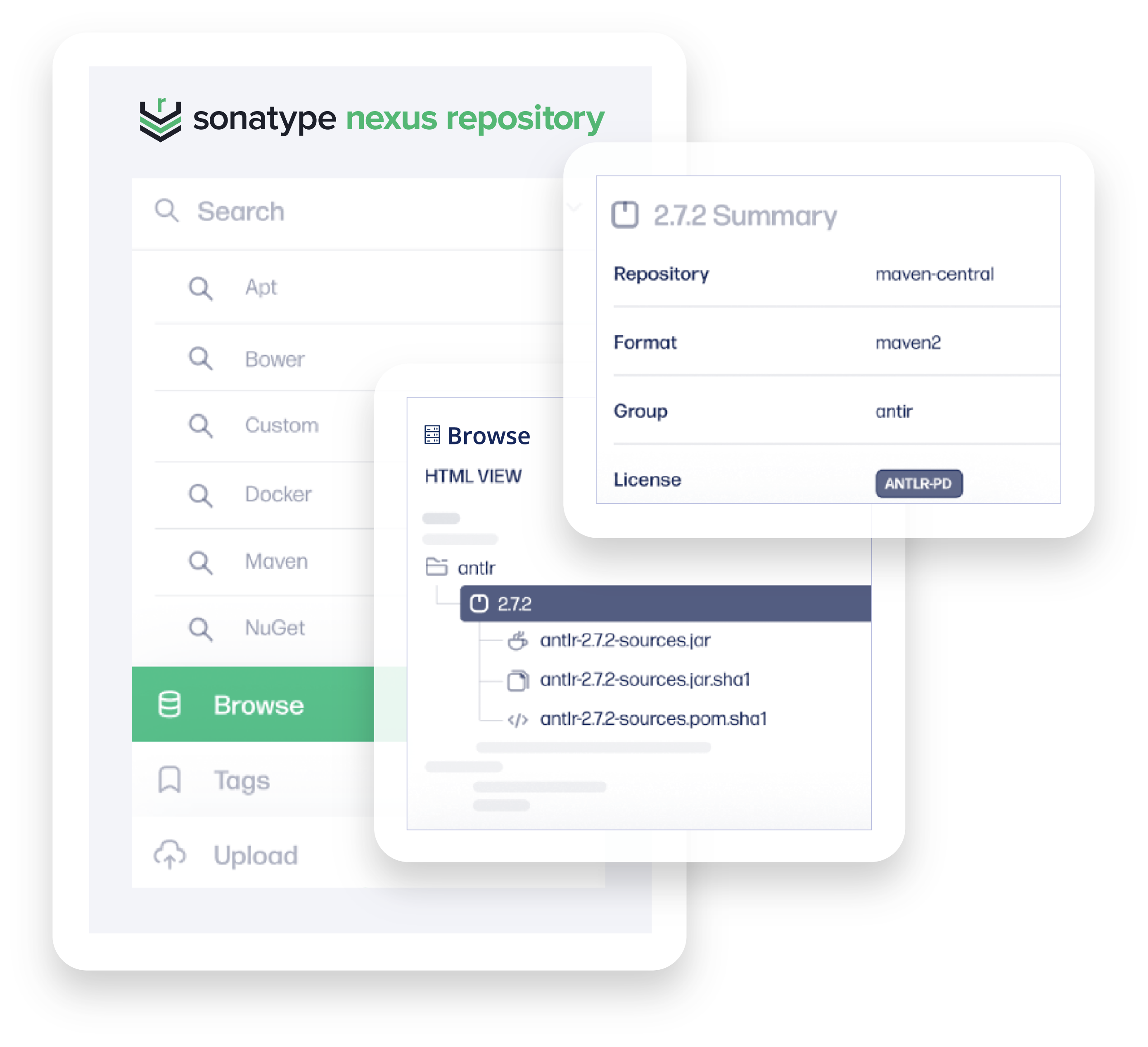
  • Searching Maven Repositories
    Sonatype's Nexus Repository Manager allows you to search for artifacts:
    • By GAV (GroupID, ArtifactId, Version) Coordinates
    • Which contain a Class Name or a Class Name Pattern
    • By Checksum
  • Proxying Maven Repositories
    
Create intelligent proxies of remote repositories with proxy repository type.
  • Hosting Local Maven Repositories
    In less than four minutes, you'll be up and running with the most capable repository manager on the market.
  • Proxying Mirrors of Maven Repositories
    For each proxy repository, Nexus is now able to be configured with an ordered list of URLs to use as mirrors of the remote repository.
  • Flexible Repository Configuration
    Nexus is very flexible and supports a variety of configurations for sharing the same instance among multiple teams.
  • Opensearch integration
    
Easily locate and search for artifacts in a Nexus repository using the native search capabilities of a web browser.
  • Maven settings template management

    Manage and distribute M2 settings to developers with the Nexus Maven plugin.
  • Enterprise LDAP integration
    
Integrate with enterprise security systems and reuse existing user and group structures from an LDAP server using intelligent mapping of existing user and group structures to Nexus roles.
  • Verification of PGP Signatures
    Nexus allows for validation of PGP signed artifacts, and blocks access based on the results of that check.
  • Artifact procurement

    Control and approve artifacts from remote repositories and create "clean-room" production repositories with approved software artifacts.
  • Configuring Staging Repositories
    Staged software releases in Nexus Professional are the best way to enable your development team to push a release to an artifact repository such as Nexus while providing management and quality assurance with a way to test and approve a release before "burning" it to production.
  • Staging suite
    
Manage a software release and provide decision-makers with the ability to approve a staged software release.
  • Eclipse P2 repository support
    
Simplify setup and manage a standard Eclipse development environment by proxying and grouping Eclipse update sites.
  • OSGi Bundle repository support
    With Nexus Professional 1.3.5 you will now be able to do with OBRs what you already could do with Maven and P2 repositories:
    1. dynamically generate OBR metadata for your existing repositories
    2. proxy and cache remote OBRs, including both metadata and bundles
    3. host local OBRs and deploy bundles into them using the UI or Maven
    4. group all of the above types of OBRs into a single merged OBR
    5. apply CRUD privileges to control access to particular bundles

  • Plugable Architecture
    Nexus allows for extensibility in a container independent way. Sonatype is trying to make it easier for developers to innovate on the Nexus platform without having to adopt a whole series of technologies.
  • Repository mirrors for proxy and hosted repositories
    
Configure Nexus to download artifacts and POMs from a remote repository mirrors. Using the Nexus UI, you can also configure a list of mirror URLs for a hosted repository.
  • Bookmarkable URLs

    Bookmark specific locations and panels within the application for quick access